Tuesday, April 9, 2024

Self-Care Tips to Soothe Aching Feet at Home


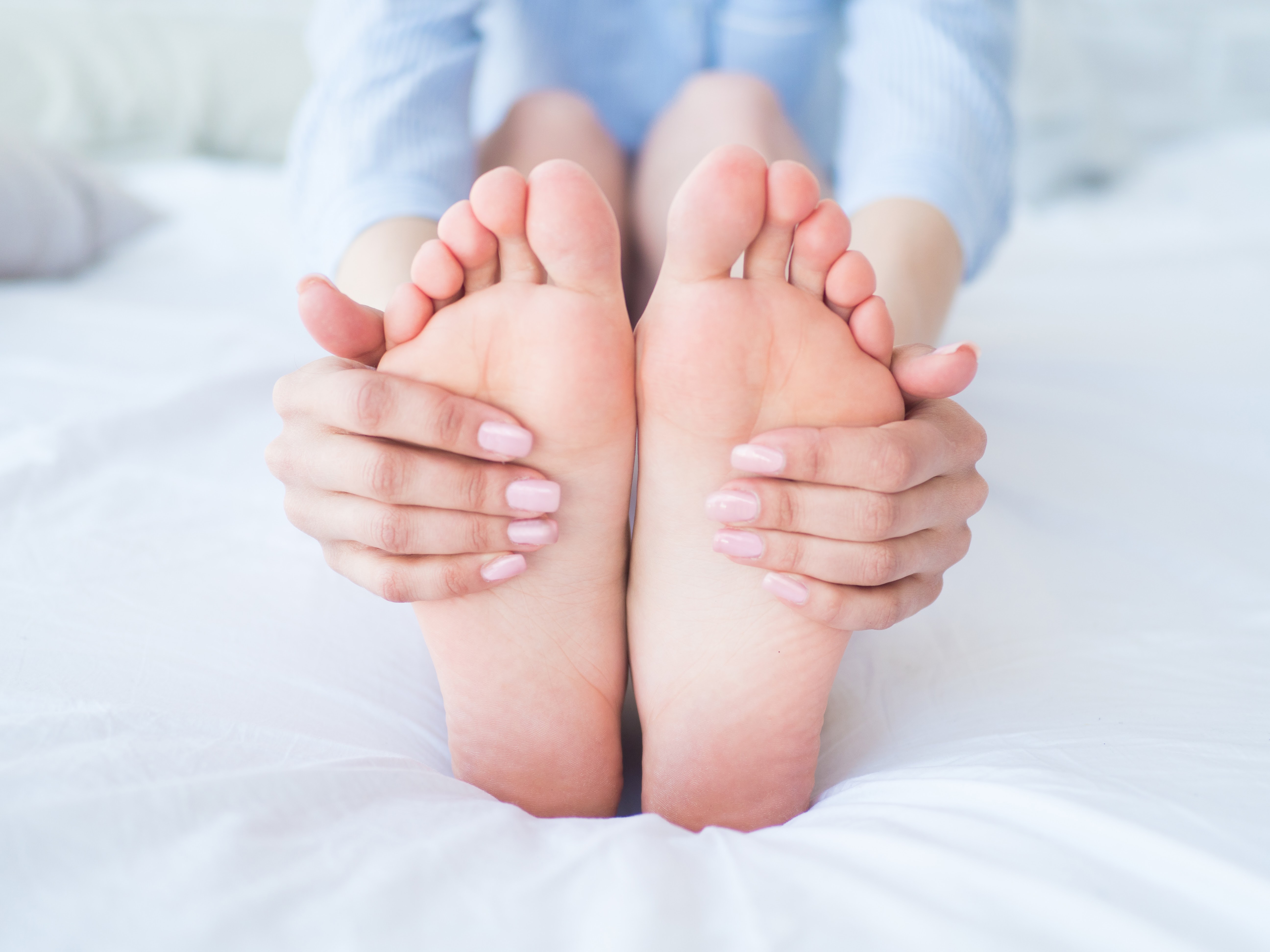
A long day at work or play can leave you with sore feet, but you can take steps to prevent foot pain and soothe your aching feet.

Common Causes;

  • Foot structure: Flat feet, high arches, or arthritis (painful joints that don't move easily)
  • Injury: Strains, sprains, and other kinds of damage
  • Obesity: Strain on ligaments, muscles, and joints from being overweight
  • Overuse: Too much walking or standing, especially on hard surfaces1
  • Pregnancy: Hormonal changes that make ligaments loose and stretchy
  • Poorly fitting shoes: Footwear that is too loose, too tight, or too narrow for your feet2

8 Ways to Soothe Foot Pain

Besides kicking back and giving your feet a rest, here are some remedies that can help ease the ache of tired feet:

Use Moist Heat

One of the best remedies for relaxing sore muscles is a foot bath.3 Soak your feet in a basin of warm water or a foot spa for five to 10 minutes.

Adding Epsom salts to the water can be extra relaxing. You can find Epsom salts in the first aid or foot care section of drug stores and big box retailers. Sprinkle 1 to 2 tablespoons into a gallon of warm water. If your feet are swollen, hot, or tired, use cool water instead of warm. Afterward, elevate your feet for a half hour or more.

Stretch Your Feet

Stressed muscles may contract or spasm. To relieve this tightness, stretch your feet. A good time to stretch is after a warm soak, when your muscles are relaxed. Sit in a comfortable position. Gently roll your ankles and toes in circles. You can use your hands or an exercise band to stretch tight places on your feet and ankles.

To include your calf muscles, try a runner's stretch. Stand several feet away from a wall or counter. Lean forward, placing your hands against the wall. You should feel a good stretch along the back sides of your legs. Do each stretch for 10 to 20 seconds for the best results.

Give Your Feet a Workout

Exercises will help strengthen your ankles, feet, and toes.

Try these moves:

  • Pick up objects with your toes and move them from one pile to another.
  • Rise up on your toes, lifting your heels off the ground.
  • Do ankle pumps, moving your foot up and down.
  • Roll the bottom of your foot on a frozen water bottle, a tennis ball, or a golf ball. 

Try Touch Therapy

Apply oil or lotion to the soles of your feet. Then massage them, pressing gently in any sore areas. Focus on the plantar fascia, the cord-like band that runs along the length of the arch from the ball of your foot to the heel.

To find the plantar fascia, flex your toes upward. You should be able to feel it if you follow the underside of your big toe down through the arch. Keeping your plantar fascia relaxed is a good idea. It acts as a shock absorber when your feet hit the ground. In fact, if your heels are sore, then tight or injured plantar fascia may be the cause.

Wear Arch Supports

Over-the-counter arch supports for your shoes may bring you some relief. Arch supports will help decrease the shock that your feet experience with every step. If your heel and the ball of the foot are sore, full-length arch supports can cushion them.

Check Your Shoes

To prevent foot pain, your shoes need to be the right size and shape. The next time you're in a shoe store, take a moment to have your feet measured. Your footwear needs may have changed. You may need to switch the style or size of your shoes if:

  • A bunion, hammertoe, or other condition has changed your foot shape
  • A neuroma has formed around a nerve, causing you pain
  • You've started a new type of exercise
  • Your foot size has changed as you've grown older
  • Sandals with too little support are causing foot fatigue
  • You're on your feet more than you used to be
Keep in mind that a loose shoe can also cause foot soreness. When your feet slide around in your shoes, blisters or black toenails can develop. You may also need new shoes if worn-out soles are changing how your feet hit the ground.

Trim Calluses and Corns

The hard, dry skin of calluses and corns can put pressure on the bottom of your foot. Your feet may crack, bleed, or become infected.

First, soak your feet in warm water for a few minutes. Dry them and use a pumice stone or emery board on the hard spots. Apply moisturizing lotion or cream. Then put on socks to seal in the added hydration.

Consider Acupuncture

Acupuncture is a traditional Chinese medicine practice. There is some evidence that acupuncture helps with foot pain, though more research is needed to confirm the benefits. This is a more holistic approach to mend your pain.

Foot soreness can be caused by your shoes, your foot's structure, a health condition, or your daily activities. You may be able to ease foot pain with warm foot soaks, massage, stretches, or acupuncture. If your shoes are part of the problem, you may want to work with a professional to make sure the style, size, and support are right for you.

Source

Saturday, April 6, 2024

Every Method of Nail Polish Removal (19 Methods)


Jess Chia, Allure's Executive Beauty Director, tries out almost every method of nail polish removal, including using acetone, non-acetone remover, cream remover, vodka, toothpaste, Windex, perfume, deodorant, acetone pads, hairspray and more methods. Find out what method might be the best method for you.

Wednesday, April 3, 2024

What Are Corns On Feet?

Corns on the feet are bumps that consist of thick, hardened layers of skin. They tend to form on bony areas of the feet, especially on the tops and sides of toes. Some foot corns have a hard center, also called a core. The bumps are typically round and relatively small. Friction and pressure on the feet are the most common causes of corns. Wearing shoes that slip and rub against the skin on the feet can result in a corn. Shoes that squeeze the feet can also cause corns.

There are three different types of corns:

  • Hard corns are the most common type of foot corn. As the name suggests, hard corns feel hard to the touch. They form most often on the tops of toes.
  • Soft corns are pliable and soft to the touch. They usually form between toes.
  • Seed corns are very small and typically form on the soles of feet.

Contrary to popular belief, corns are not the same thing as calluses although the two are often confused. While both corns and calluses form because of friction and pressure, and both consist of hardened skin, there are some key differences.

  • Calluses are more common on the soles of the feet while corns are more common on the tops and sides of the toes.
  • Calluses tend to be large, covering a significant area of the sole of the foot. Corns, on the other hand, tend to be small.
  • Corns are often painful to the touch while calluses aren’t usually tender or sensitive.
  • There’s often inflammation on or around a corn while calluses don’t usually become inflamed. 

WHAT CAUSES A FOOT CORN?

Foot corns form due to pressure and friction against bony areas of the feet, usually the toes. The most common culprit of foot corns is ill-fitted shoes that are too loose or too tight. Loose shoes can cause the foot to slide around and rub against the shoe. Tight shoes, on the other hand, can squeeze the feet, including the toes, causing pressure.

Socks that don’t fit right and slip around can cause friction. Wearing shoes without socks can also lead to friction since the foot doesn’t have a protective layer between the skin and shoe.

Individuals with health conditions that cause abnormal alignment of the bones in the feet may be at a higher risk of corns. These conditions include arthritis, bunions and hammertoes.

Sunday, March 31, 2024

Spring Time Nail Look With OPI


Try all the cutest Spring themes in this pastel mix-and-match nail art tutorial. Best of all, you can create the designs using easy-to-find items, like a toothpick and bobby pin. 

Thursday, March 28, 2024

Is Going Bare Foot Good For You?


Wasn’t man designed to go bare foot?

Well yes, we weren’t born with protective coverings on our feet, so obviously we were intended to walk around at least some of the time with no shoes on! But how often will depend on a number of factors.

What are the benefits?

Most Podiatrists would agree that some time bare foot is great for airing out your feet to keep them healthy. Another benefit is that your feet can become stronger when walking on different surfaces, thus reducing your risk of injury. Walking with no shoes for periods time can counteract the ill effects of poorly fitted shoes - bad shoes can cause a lot of problems!

There is also evidence that time without shoes on can improve balance and proprioception (your body's ability to know where it is in space).

Taking a bit of a look around the internet I have found some pretty big claims about the benefits of barefoot walking but take them with a grain of salt.. some of the benefits stated are improved sleep, blood pressure control, improved posture and decreased chronic pain.

What are the downsides of walking barefoot?

Walking bare foot can be tricky for people with underlying conditions, especially those with diabetes or other neurological impairment. If you have a condition that does mean that you have a decreased sensation in your feet, it is best that you keep your feet covered to protect them from injury. Any small injury to the foot could potentially lead to much more serious consequences.

Going barefooted in communal areas such as swimming pools or gym showers is quite a normal thing, but can expose you to infection, like fungus (tinea) or even viral infection (verruca, otherwise known as warts).

Walking for long periods of time on hard surfaces with no shoes can lead to increased callus growth that can become painful over time, but can also lead to back pain due to a lack of shock absorption at your feet. The hard shock of every step can reverberate to your spine.

Studies have shown that walking bare foot actually increases the risk of falls in the elderly.

If you do have a foot problem, extended periods walking without shoes may actually increase or accentuate the issues you have.

Is it right for me?

If you are in good health and have none of the problems listed above, bare foot walking can be beneficial for short periods of time.

What about for kids?

Bare foot walking is beneficial for children and will allow their feet to develop naturally. More on that in another blog :)

Anything else I should consider?

Way, way back when cavemen roamed the world barefoot, they would have walked on grass, dirt, sand and occasionally rocks – these days our environment is much harder on our feet with concrete, tiles and the like as regular surfaces we walk on. The flooring of today is much harder on our feet, and hence we shouldn’t really expect to be able to walk everywhere without shoes!

I have foot pain! Should I try bare foot walking to make me feel better?

If you have an existing foot problem, it would be unlikely that tossing your shoes will improve your foot health in the short term. Your best course of action is to find out why your feet are hurting by having a consultation with your podiatrist – we can help you tailor a plan to get your feet feeling better so you can walk comfortably with bare feet into the future!

Article Source

Monday, March 25, 2024

How To Improve Poor Circulation In The Feet

The body transports blood, oxygen, and nutrients to cells around the body through the circulatory system. If blood vessels in an area close, harden, or narrow, a person may develop reduced circulation.

Poor circulation in the feet can cause the feet to become cold, discolored, or numb. Cold weather or an underlying condition, such as Raynaud’s disease, can cause it.

People with poor circulation may notice their feet feel cold or numb. They may also notice discoloration. The feet may turn red, blue, purple, or white.

These symptoms may worsen in certain situations, such as when a person sits still for long periods or goes outside in cold weather. However, for some people, these symptoms may be constant or flare up due to an underlying condition.

Additional symptoms of poor circulation can include:

  • dry or cracked skin
  • hair loss on the legs or feet
  • weak toenails
  • slow wound healing 

Underlying Causes Of Poor Circulation In The Feet

Raynaud‘s disease
Raynaud’s disease syndrome causes blood vessels to narrow when someone is cold or, sometimes, when stressed. This limits the amount of blood flowing to the fingers and toes. RarelyTrusted Source, it may affect other areas, such as the nose and ears.

The symptoms include:
  • fingers or toes turning white or blue
  • cold extremities
  • pain
  • numbness
  • tingling
  • a burning sensation
These symptoms can last as little as 1 minute or as long as several hours.

Most people with Raynaud’s disease have the primary form of the condition. Some people have secondary Raynaud’s, which occurs due to another illness. Secondary Raynaud’s tends to be more severe.

There is no cure for Raynaud’s, but it is possible to reduce the symptoms and potentially reduce the frequency of attacks with medical treatment and lifestyle changes.

Acrocyanosis
Acrocyanosis is a condition that causes the extremities, such as the toes, to turn blue. This occurs when the blood vessels constrict, preventing blood flow and oxygen from moving through that part of the body.

It is a rare conditionTrusted Source that is similar to Raynaud’s phenomenon. The main symptoms include:
  • blue-tinged fingers or toes
  • cold, clammy skin
  • swelling
  • a typical pulse
As with Raynaud’s, there are two types of acrocyanosis: primary and secondary. Primary acrocyanosis occurs on its own and typically affects both sides of the body, for example, both feet. Further research is necessary to understand the cause.

Secondary acrocyanosis often affects only one side of the body and can beTrusted Source a result of many conditions, including eating disorders, blood disorders, and genetic conditions.

Diabetes
If a person has diabetes, they are at riskTrusted Source of blood vessel damage. This may happen if they experience high blood glucose levels for extended periods.

If a person with diabetes does not receive any treatment, they could develop reduced circulation in the feet, as well as foot ulcers that do not heal.

Managing diabetes effectively can help prevent foot problems. People with diabetes should receive an annual foot examination to ensure they do not have poor circulation, ulcers, or neuropathy.

Arteriosclerosis
Arteriosclerosis occurs when the arteries harden, and blood cannot travel through them easily.

Some people with arteriosclerosis exhibit no symptoms, while others may develop some. The symptoms vary depending on which arteries the condition affects and may include:
  • pressure in the chest
  • shortness of breath
  • irregular heartbeat
  • weakness
  • problems with breathing
  • confusion
  • dizziness
Treatment for arteriosclerosis may include medication, such as medication to control a person’s cholesterol or surgery to open blocked arteries or remove plaque buildup.

Peripheral artery disease
If left untreated, arteriosclerosis can turn into peripheral artery disease (PAD). PAD occurs when plaque builds up in arteries. This can reduce or even stopTrusted Source blood flow, resulting in tissue death and potentially amputation.

Symptoms may include:
  • leg pain
  • weakness in the legs
  • leg cramping
  • toenails not growing
  • a pale or blue foot
Prescription medication can improve symptoms in people with reduced circulation. In more severe cases, a person may require surgery.

How to improve circulation at home
The best way to improve foot circulation is to treat any underlying conditions that may be causing it. If doctors cannot pinpoint a cause, however, several self-care strategies may help.

People can try:
  • Move more: A 2020 studyTrusted Source found that simple leg stretches can help improve vascular function after 12 weeks. The stretching regime made arteries less stiff, helping them dilate. If sitting for a long time, set reminders to get up and move around.
  • Massage: Massaging the feet can stimulate circulation. People with Raynaud’s may also find it helps prevent or shorten attacks.
  • Relaxation techniques: Breathing exercises, meditation, yoga, and tai chi can help manage unavoidable stress.
  • Avoid caffeine, nicotine, and alcohol: Caffeine and alcohol can constrict blood vessels and exacerbateTrusted Source Raynaud’s.
  • Wear compression socks: Compression socks apply pressure to the legs and feet, forcing blood to travel back toward the heart.
  • Stay warm: If circulation problems worsen in cold conditions, keep the home at a comfortable temperature and wrap up in layers. Use hand or foot warmers when necessary.

Friday, March 22, 2024

OPI Spring Nail Look


Here is a fun nail art to get ready for spring with this easy, colorful creation using OPI.
Step 1
Apply a coat of OPI Natural Base Coat and let dry.
Step 2
Apply a coat of OPI Baby Take Vow and let completely dry.
Step 3
Apply Dots of Each Shade starting at the tip of the nail going up towards the cuticle, tapering in size.
Step 4
Apply more larger dots at the tip of the nail to create ombre
Step 5
Clean up any lacquer on the skin with a clean up brush saturated in lacquer remover.
Step 6
Apply a coat of OPI Top Coat.

Enjoy!